
There’s a particular kind of exhaustion that comes with hiding your smile, avoiding photos, choosing soft foods at every restaurant, laughing with your hand over your mouth because you don’t want anyone to see what’s happening with your teeth. For many patients across Kansas, this isn’t vanity. It’s a daily quality-of-life issue that affects confidence and nutrition, and often puts real strain on relationships. If that sounds familiar, you’ve probably wondered whether same-day implants are actually real or just clever marketing.
The short answer is yes, they’re real. Teeth in a day Kansas patients are pursuing this option through a clinically validated procedure, and same-day full-arch implants are being placed right now at practices throughout the state. But there’s a meaningful difference between the marketing version of this procedure and the clinical reality. This article gives you the full picture so that when you walk into a consultation, you’re asking the right questions instead of starting from scratch.
At Envy Dental, Implants & Esthetics in Wichita, Dr. Neda Vesali works with patients from across Kansas who are exploring whether they’re candidates for this kind of treatment. Consultations are designed to be informational, focused on your specific situation and built around real clinical data, not a sales pitch. Before any of that, though, understanding what “teeth in a day” actually involves puts you in the driver’s seat.
What “Teeth in a Day” Actually Means
The phrase sounds almost too good to be true, so let’s define it plainly. Same-day teeth, also called immediate-load implants, means that on the day your implants are surgically placed, a full provisional set of teeth is attached to them before you leave the office. You arrive without a complete smile. You leave with one.
What “same day” does not mean is that the teeth you walk out with are your final, permanent restoration. The provisional teeth are a temporary prosthesis designed to function during the healing phase. Your permanent arch is fabricated and placed months later, after the implants have fully fused with your jawbone. This distinction matters because some patients expect the first set to be the forever set. They’re not, but they are fixed, functional, and attached to your implants from day one.
For patients who have spent years managing slipping dentures or visible gaps, even a temporary fixed arch represents a significant shift. You’re not going through a prolonged toothless phase while waiting for healing. That’s what separates immediate-load protocols from traditional implant timelines, which often required months of waiting before any prosthesis was attached at all.
How All-on-4 Makes Teeth in a Day Kansas Possible
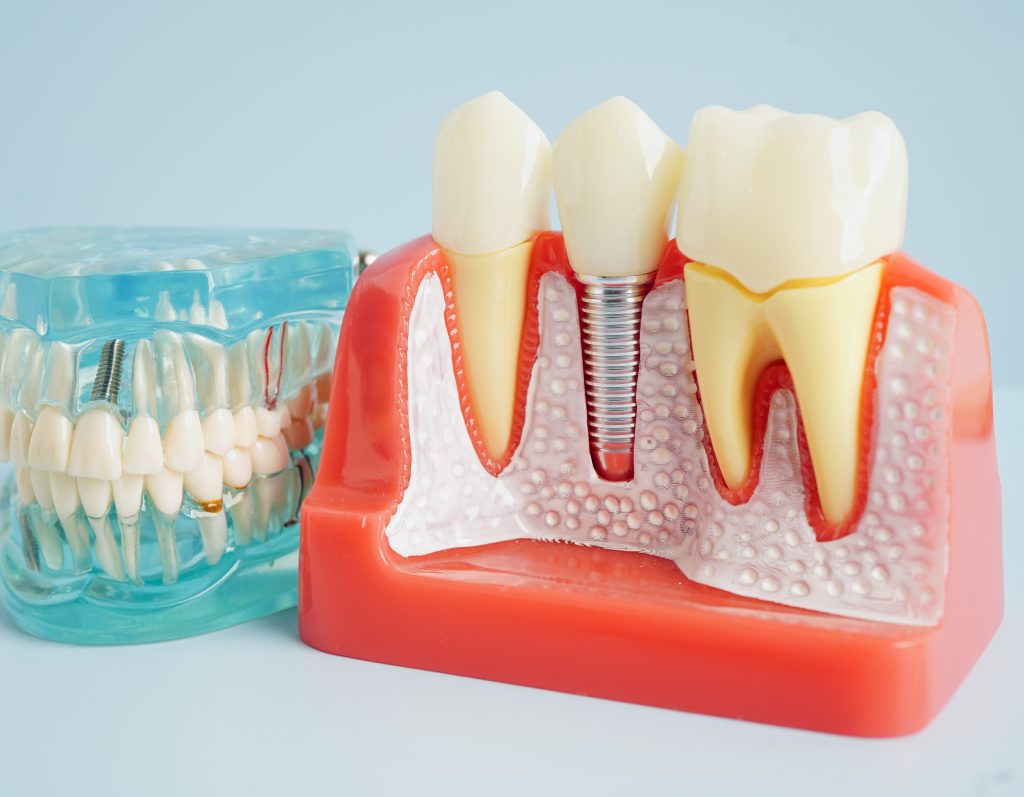
All-on-4 uses just four implants per arch, strategically placed at specific angles to maximize contact with available bone, as detailed in clinical implant literature.
The Angled Implant Advantage
The two rear implants are tilted rather than placed straight down, which allows them to anchor into denser bone that persists even in patients with significant jaw atrophy. This angled placement is what makes it possible to skip bone grafting in many cases, and skipping grafting is what makes a single-session procedure feasible.
Traditional full-arch restorations typically required six to eight implants per arch, often preceded by bone grafting when the jaw had shrunk from years of tooth loss or long-term denture use. Grafting adds healing time, additional appointments, and cost. All-on-4 was designed to work around those barriers using the bone that naturally persists in the front and angled rear positions of the jaw.
The result is a procedure that can be completed in one surgical session, with a provisional arch attached the same day. That’s not a shortcut, it’s a design solution. For Kansas patients who have lost significant bone volume over years of missing teeth or ill-fitting dentures, this technique opens a door that traditional implant methods had effectively closed.
The Procedure: From Consultation to Walking Out With Teeth
CBCT Imaging and Pre-Surgical Planning
Before surgery day, your provider will take 3D imaging (CBCT scans), review your medical history in detail, and have a candid conversation about your goals and concerns. Implant positions are mapped digitally before you ever sit in a surgical chair. This planning stage is where candidacy is confirmed and expectations are set clearly. Some patients also need extractions of remaining failing teeth, and in many cases those extractions happen during the same appointment as implant placement.
Surgery Day and Recovery Timeline
Surgery day typically runs two to six hours from start to finish. Patients are comfortably sedated throughout, and most describe feeling little to nothing during the procedure itself. Once the implants are placed and confirmed to have adequate primary stability, the temporary full-arch prosthesis is attached, adjusted, and you go home with it that same day. You can watch an educational overview of how same-day temporary arches are loaded and fitted to better visualize surgery day.
After surgery comes osseointegration, the biological process where bone gradually grows around each implant and locks it permanently in place. This takes approximately three to six months. During that window, you wear the provisional prosthesis and follow a soft-food protocol to protect the healing sites. At the end of osseointegration, the final permanent restoration is fabricated and placed. That’s the prosthesis built for decades of use.
Teeth in a Day Kansas: Who Qualifies and What Can Rule You Out
Candidacy for same-day full-arch implants comes down to a few key factors. Patients who are strong candidates generally have:
- Good general health or well-controlled systemic conditions
- Adequate bone volume and density at the implant sites
- No active oral infection or untreated gum disease
- Strong primary implant stability at the time of placement
When those factors are present, immediate loading is considered both safe and predictable. Controlled diabetes is not an automatic disqualifier. Uncontrolled diabetes is, because poor blood sugar management disrupts healing and significantly raises infection risk.
Common reasons a provider may recommend delayed loading instead include heavy smoking, bruxism (clenching or grinding), significant bone loss requiring simultaneous grafting, immunosuppression, and poor oral hygiene. These aren’t rejections, they’re often redirections. Many patients who don’t initially qualify become candidates after a preparatory phase: a smoking cessation window, periodontal therapy completed in advance, or bone grafting done as a first stage.
Online candidacy quizzes are useful starting points, but they can’t replace a clinical exam. Bone quality, jaw anatomy, and bite forces can only be accurately evaluated through imaging and an in-person assessment. At Envy Dental in Wichita, implant consultations are structured to answer the candidacy question with real data. A focused conversation about your situation, including whatever dental history you’ve been hesitant to share, is where the process actually begins.
What Recovery Really Looks Like
The first 24 to 72 hours after surgery bring the peak of swelling and soreness. Most patients describe the discomfort as manageable with prescribed medication, not the severe pain many anticipated beforehand. Swelling typically begins to resolve within the first week. You go home the same day as surgery, and the priorities during that first window are rest, ice as directed, and a strict soft-food diet. Yogurt, scrambled eggs, mashed potatoes, smooth soups, and applesauce are common first foods.
Most patients return to desk work and light daily activity within two to three days. Physically demanding work or exercise typically requires a longer break, and your provider will give specific guidance based on your case. Firmer foods are reintroduced gradually over the first few weeks. Hard, crunchy, and sticky foods stay off the menu until the final prosthesis is in place, because the provisional teeth are functional but not designed to handle the same stresses as the permanent restoration.
Cost, Financing, and Next Steps for Wichita-Area Patients
Financing Options
In Kansas in 2026, All-on-4 treatment averages around $18,920 to $24,000 per arch, with a realistic range of $15,000 to $30,000 per arch depending on the practice, case complexity, and whether extractions or preparatory work are needed. Wichita pricing tends to sit at the upper end of the Kansas range, reflecting the level of clinical resources and technology involved. Full-mouth treatment covering both arches typically runs $30,000 to $60,000 total.
These numbers are significant. Many patients come to realize, though, that when you factor in repeated denture replacements, adhesives, and the long-term health costs of untreated bone loss, implants often compare favorably over time. Exploring flexible payment plans and financing options at Envy Dental can help break the cost down into manageable monthly obligations through trusted providers like CareCredit and Proceed Finance, with starting payments ranging around $192 to $495 per month depending on case size and loan terms.
Dental insurance rarely covers the full cost of All-on-4, but it may cover portions related to extractions or comprehensive dental services. It’s worth verifying your specific plan details directly. Practices that specialize in full-arch implants typically help patients understand their benefits and make the most of whatever coverage exists.
The most important variable in any full-arch implant case isn’t cost alone, it’s the clinical team’s experience with immediate-load protocols and the quality of the planning process. When evaluating providers, ask about 3D imaging capabilities, the provider’s implant volume, and how they handle unexpected complications during surgery.
Your Next Step: Teeth in a Day Kansas Consultations at Envy Dental
Same-day teeth in Kansas is not a gimmick. All-on-4 is a clinically validated technique that allows qualified patients to leave their surgery appointment with a full provisional arch and a clear path to permanent teeth within months. The process takes time, requires the right candidacy factors, and involves a real recovery. The outcome is fixed teeth that feel and function like natural ones, which is why so many patients describe this as one of the most meaningful decisions they’ve made.
If you’ve been putting this conversation off because of fear or cost uncertainty, or simply because you don’t know where to start, that’s understandable. It’s exactly the kind of situation Dr. Vesali and the team at Envy Dental, Implants & Esthetics are equipped to help with. A consultation is a conversation. You’ll get answers about your specific candidacy, a transparent treatment plan, and real financing options tailored to your situation.
Finding out whether you qualify costs nothing except an hour of your time. If you’re in the Wichita area, that hour could be what moves you from uncertainty to a clear answer. Contact Envy Dental, Implants & Esthetics to schedule your implant consultation today.